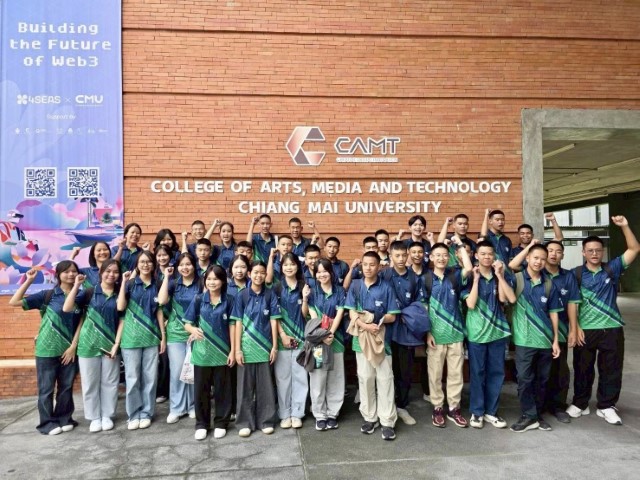
กิจกรรมอบรมค่ายเตรียมวิศวกร ร่วมกับวิทยาลัยศิลปะ สื่อ และเทคโนโลยี มหาวิทยาลัยเชียงใหม่ ในหลักสูตร “GENERATIVE AI”
วันเสาร์ที่ 6–7 มิถุนายน 2569 นักเรียนห้องเรียนพิเศษเตรียมวิศวกรคอมพิวเตอร์และหุ่นยนต์ ระดับชั้นมัธยมศึกษาปีที่ 4/5 โรงเรียนจักรคำคณาทร จังหวัดลำพูน เข้าร่วมกิจกรรมอบรมค่ายเตรียมวิศวกร ร่วมกับวิทยาลัยศิลปะ สื่อ และเทคโนโลยี มหาวิทยาลัยเชียงใหม่ ในหลักสูตร “GENERATIVE AI” ณ อาคารศูนย์นวัตกรรมการเรียนรู้ วิทยาลัยศิลปะ สื่อ และเทคโนโลยี มหาวิทยาลัยเชียงใหม่
การจัดกิจกรรมครั้งนี้มีวัตถุประสงค์เพื่อส่งเสริมและพัฒนาศักยภาพของนักเรียนด้านการเขียนโปรแกรม การออกแบบเว็บไซต์ และการประยุกต์ใช้เทคโนโลยีปัญญาประดิษฐ์ (Artificial Intelligence: AI) รวมถึง Generative AI เพื่อสร้างสรรค์ผลงานด้านดิจิทัล พัฒนานวัตกรรม และเสริมทักษะการแก้ปัญหาอย่างเป็นระบบ
นักเรียนได้เรียนรู้ผ่านกิจกรรมเชิงปฏิบัติการ (Workshop) ฝึกกระบวนการพัฒนาโปรแกรม การออกแบบคำสั่ง (Prompt Engineering) การใช้เครื่องมือ AI เพื่อสนับสนุนการเขียนโปรแกรม ตลอดจนการสร้างผลงานต้นแบบที่สามารถต่อยอดสู่การศึกษาด้านวิศวกรรมคอมพิวเตอร์ วิทยาการคอมพิวเตอร์ และเทคโนโลยีหุ่นยนต์ในอนาคต อันเป็นการเปิดโอกาสให้นักเรียนได้พัฒนาทักษะแห่งอนาคต และเตรียมความพร้อมสู่โลกเทคโนโลยีดิจิทัลอย่างมีประสิทธิภาพ
On June 6–7, 2026, Grade 10 students from the Computer Engineering and Robotics Special Program (Class 4/5) of Chak Kham Khanathon Lamphun School participated in the Pre-Engineering Camp Training Activity in collaboration with College of Arts, Media and Technology, Chiang Mai University under the “GENERATIVE AI” program.
The activity was held at the Learning Innovation Center Building, College of Arts, Media and Technology, Chiang Mai University.
The camp aimed to promote and develop students’ skills in programming, website design, and the application of Artificial Intelligence (AI) technologies, including Generative AI, to create digital works, develop innovations, and strengthen systematic problem-solving skills.
Through hands-on workshops, students learned about software development processes, prompt engineering, the use of AI tools to support programming, and the creation of prototypes that can be further developed toward future studies in computer engineering, computer science, and robotics technology.
This activity provided students with opportunities to develop future-ready skills and prepare themselves effectively for the digital technology era.